
Renewing Our Academic Promise
Building on Our Past, Creating a Just Future
By Laura A. McLary, Nora Kizer Bell Provost, and Sarah Achenback ’88
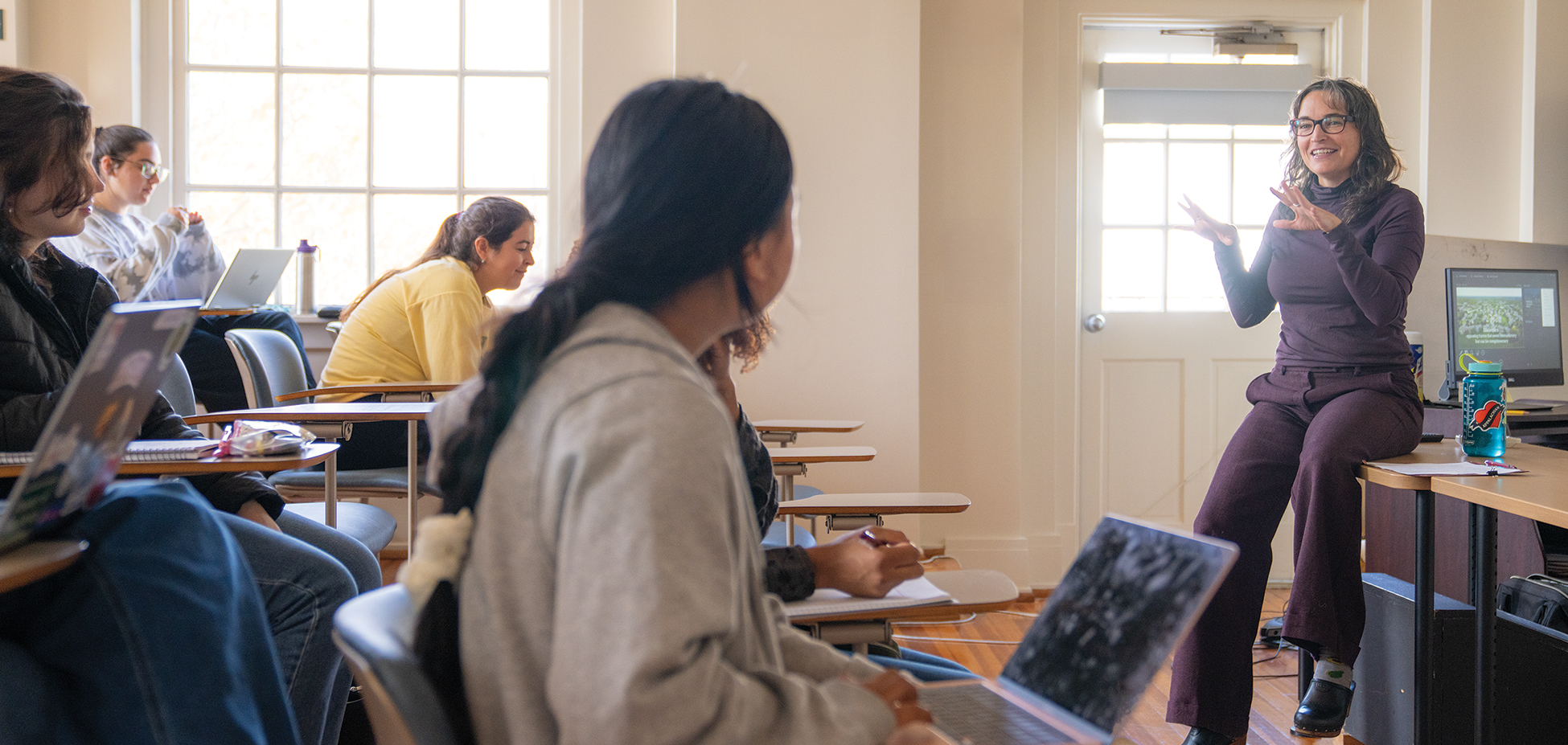
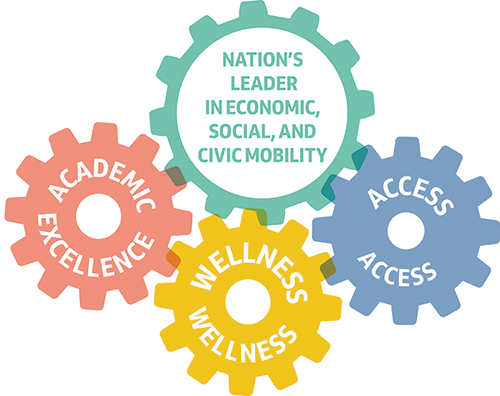 In 2023, as a part of Hollins’ strategic plan, we began our academic renewal process grounded in a simple but urgent premise: our students are learning and growing in a rapidly changing world.
Our multi-year investment in academic renewal strengthens our academic programs, ensuring they remain rigorous, distinctive, and responsive to today’s students and the world they will enter after graduation. This work expands experiential learning, creates leadership opportunities for all students, introduces new interdisciplinary majors and programs, and empowers students to thrive in their careers as the world continues to change.
More than a curricular or program update, academic renewal is a transformation. It reimagines how students learn, engage, and lead in their communities and the world. Rather than departing from our traditions, academic renewal reaffirms our liberal arts foundation as a framework for building a just future amid technological, economic, social, and environmental disruption.
Charting this direction required months of collaborative work led by a dedicated team of faculty and staff who invested countless hours listening to faculty, staff, and students and researching both national trends in higher education and Hollins’ own institutional strengths and needs. These conversations were deep and invigorating, both challenging and inspiring. Drawing on our liberal arts tradition, we asked fundamental questions: What does it mean to teach and learn in a post-pandemic world? How do we define leadership, and what role does it play in creating a just world? How can the liberal arts help students cultivate belonging and agency while confronting the world’s most wicked problems?
As we begin implementing academic renewal, there are many stories worth telling. One powerful example is public health, Hollins’ newest and fastest-growing major.
A few years ago, faculty recognized a pent-up demand for programs that reflect the values-forward ethos of a liberal arts education while offering students meaningful, hands-on learning experiences. From that insight, the public health major was born, connecting theory with practice and preparing students for work that makes a tangible difference. Thanks to the visionary leadership of Jalloh Abubakarr, joined in 2024 by Susan Eagle, Hollins has not only met growing student interest but has already seen remarkable outcomes.
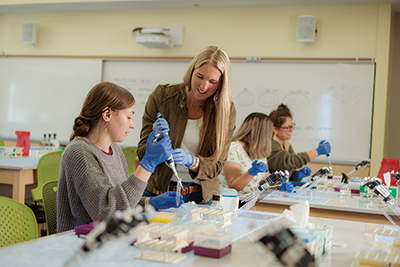 Alumnae, including Savannah Scott ’22, Jasmine Carmichael ’23, and Assi Abe ’24, are pursuing impactful careers in their communities. From study abroad in Kenya to conference presentations and the creation of initiatives like Hollins Access to Public Health Initiatives (HAPPI), students are discovering their capacity to effect lasting change.
Research tells us that all students — and especially first-generation students, a growing segment of our population — benefit deeply from experiential learning. Applying classroom and theoretical learning in real-world settings, supported by close faculty mentorship, strengthens learning and fosters confidence and purpose. Hollins has long offered internships and study abroad experiences, yet these opportunities have not always been accessible to students facing financial barriers or other obligations, even as evidence confirms their critical role in student success during college and beyond.
Academic renewal addresses this challenge directly. Building on our core curriculum, experiential learning is now embedded in every major, placing hands-on, applied learning at the center of every student’s experience. Majors like public health lead the way, requiring students to complete internships in their field. Public health major Jasmine Carmichael ’23, for example, interned with local Roanoke organizations supporting unhoused individuals. By leveraging existing resources and the generosity of new donors, Hollins can now guarantee funding for every student with demonstrated financial need, ensuring access to these transformative experiences.
Another cornerstone of the public health program is leadership development. Through experiential and community-engaged learning, students discover that leadership begins with identifying a problem and applying passion and knowledge to improve lives.
As President Mary Dana Hinton reminds us, leaders do not emerge fully formed; they arise everywhere, often from the margins. This perspective challenges the misconception that leadership is about accumulating and wielding power.
When students design and implement hands-on learning and community projects and see firsthand how their work transforms lives and environments, they recognize that leadership lies at the intersection of disciplinary knowledge and the human-centered values of the liberal arts. Leadership emerges when vision, mission, and action align.
As a result of academic renewal, every Hollins student will graduate with a leadership badge, supported by the generous resources of the Batten Leadership Institute.
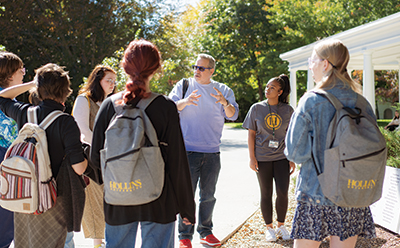 Career preparation is equally important. It’s never too early for students to reflect on how their experiences at Hollins connect to future careers and life goals. Career and Life Design (CLD) has adopted the Liberal Arts Advantage framework, which centers on the skills, competencies, and dispositions research shows are essential for lifelong success. CLD staff partner with faculty to integrate this framework into courses and curricula, helping students actively reflect on how learning in the classroom, the field, the workplace, and the community prepares them for fulfilling careers and lives.
Through academic renewal, all majors will adopt the Liberal Arts Advantage tools, enabling every Hollins student to take ownership of their career preparedness while complementing and enriching CLD services. This approach equips students with both the language and self-awareness necessary to navigate a competitive job market.
Academic renewal also invites us to explore new interdisciplinary majors that respond to emerging societal needs. As with public health, new majors and programs will draw on the past, present, and future. Our liberal arts core provides the values-based framework for imagining and building a more just future. Renewal expands interdisciplinary learning, creating new pathways across disciplines and strengthening partnerships that reflect the collaborative reality of today’s workplaces.
One exciting outcome of this process is the creation of a new Center for Just Futures. The Center will serve as a hub for interdisciplinary, real-world projects rooted in liberal arts values, supporting collaboration among students, faculty, and staff. Questions such as how generative AI will reshape work and learning, or what ethical responsibilities we hold in protecting our shared humanity, will guide this work. A recent Mellon grant provides funding for faculty to develop courses and curricular pathways that connect the arts and humanities with community organizations to address local needs.
National surveys consistently show that Hollins students demonstrate a stronger interest in social justice than their peers at other small liberal arts colleges. We are educating students who want to tackle big problems and equipping them to turn ideals into action.